


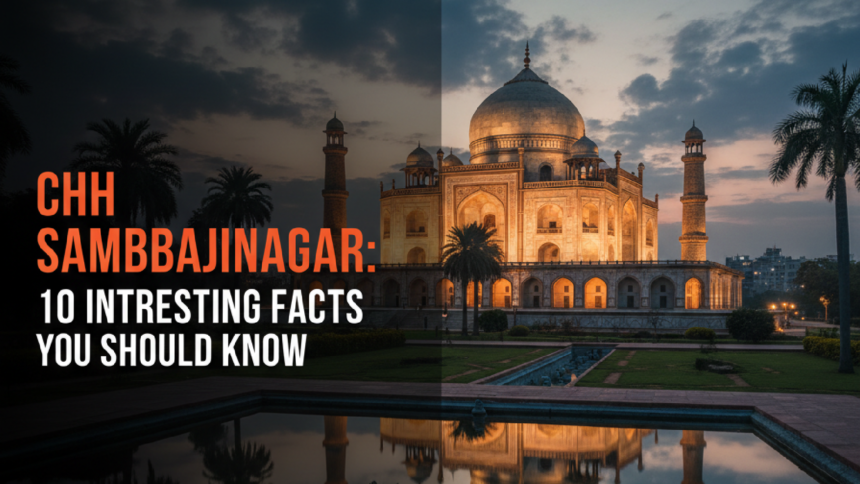
10 Revealing Facts About Chh Sambhajinagar
Chh Sambhajinagar, formerly Aurangabad, stands as a city of profound historical and cultural depth in Maharashtra. While many associate it with the proximate UNESCO World Heritage sites, its identity is woven from a far more complex tapestry of dynastic shifts, architectural innovation, and cultural synthesis. Understanding these facets provides a more complete picture of the city’s significance.
This article outlines ten key facts that define the character of Chh Sambhajinagar, offering insight for both residents and visitors seeking to appreciate its layered heritage.
- Introduction to Chh Sambhajinagar
- What Defines the City’s Narrative?
- Why the History of Chh Sambhajinagar Matters
- Key Features: 10 Interesting Facts
- How to Get Started With Your Exploration
- Best Practices for Visiting Heritage Sites
- Common Mistakes to Avoid During Your Visit
- Conclusion & Final Thoughts
Introduction with keyword
The historical narrative of Chh Sambhajinagar is a chronicle of empires. The city’s strategic location in the Deccan plateau made it a coveted administrative and military center for centuries. From the Yadavas to the Mughals and the Nizam of Hyderabad, each ruling power left an indelible mark on its architecture, culture, and very name. While its recent renaming in honor of Chhatrapati Sambhaji Maharaj is a significant event, the city’s story has always been one of evolution.
This exploration moves beyond a surface-level tour, presenting facts that illuminate the city’s role as a cultural and historical crossroads. For tourists and citizens alike, a deeper knowledge of Chh Sambhajinagar enriches the experience of its monuments and modern life.
What Defines Chh Sambhajinagar?
At its core, Chh Sambhajinagar is defined by its role as a repository of Deccan history. The city is not merely a gateway to the Ajanta and Ellora caves; it is an integral part of the same historical continuum. Its identity was substantially shaped in the 17th century when Mughal emperor Aurangzeb made it his capital, a decision that transformed it into a major hub of power for nearly two decades.
This period introduced significant Mughal architectural and administrative systems, overlaying the existing regional culture. The result is a cityscape where different historical eras coexist. The name itself, first Aurangabad and now Chh Sambhajinagar, reflects the region’s dynamic political and cultural shifts, making it a living document of Deccan history.
Why Chh Sambhajinagar Matters
The importance of Chh Sambhajinagar extends beyond its municipal boundaries; it is a case study in the confluence of cultures. The city’s history is pivotal to understanding the broader Also Read: dynastic history of the Deccan. Its monuments, from the Bibi Ka Maqbara to the Daulatabad Fort, are not isolated relics but chapters in a larger story of conquest, art, and administration in central India.
Furthermore, the city’s economic and cultural contributions matter today. It is a significant industrial and educational center in the Marathwada region. For tourists, it serves as the logistical base for exploring some of India’s most important archaeological sites. The preservation and study of its heritage are crucial for understanding the architectural and artistic achievements of past eras, providing invaluable context for scholars and visitors.
Key Benefits/Features: 10 Interesting Facts
Exploring the city’s specific historical and cultural data points reveals its unique character. These are not just trivia; they are features that define the experience of Chh Sambhajinagar.
1. Home to a ‘Tale of Two Caves’
While often mentioned together, the Ajanta and Ellora caves represent entirely different periods and religious themes. Ajanta’s caves (2nd century BCE to 6th century CE) are exclusively Buddhist, celebrated for their murals depicting the Jataka tales. Ellora’s caves (6th to 10th century CE) are a unique confluence of Buddhist, Hindu, and Jain faiths, demonstrating a period of remarkable religious tolerance. This distinction is fundamental to appreciating the region’s history.
2. The Kailasa Temple: A Monolithic Marvel
The Kailasa Temple (Cave 16) at Ellora is the largest monolithic rock-cut structure in the world. It was carved from the top down out of a single piece of basalt cliff face. Historians estimate that the project involved excavating over 200,000 tonnes of rock and took several generations of artisans to complete. Its scale and engineering remain a source of academic fascination. Related: evolution of rock-cut architecture
3. The ‘Taj of the Deccan’
Bibi Ka Maqbara, a mausoleum built by Aurangzeb’s son for his mother, Dilras Banu Begum, is a principal monument within the city. While it was modeled on the Taj Mahal, its construction utilized marble only on the main dome and parts of the facade, with the rest finished in stucco plaster. This earned it the moniker “the poor man’s Taj,” but it remains a significant example of late Mughal architecture.
4. The Impregnable Daulatabad Fort
Originally known as Devagiri, the Daulatabad Fort is a masterpiece of medieval military engineering. Its defenses include multiple concentric walls, a complex series of gates, a steep moat, and a labyrinthine passage known as the ‘Andheri’ (dark passage) designed to confuse and trap invaders. The fort’s defenses were so formidable that it was never taken by direct assault.
5. A Capital City for a Controversial Sultan
In 1327, Muhammad bin Tughlaq, the Sultan of Delhi, famously ordered the entire population of Delhi to move to Devagiri, which he renamed Daulatabad and made his new capital. The logistical failure of this forced relocation was immense, and the capital was eventually moved back to Delhi. The event remains a notable episode in Indian history.
6. The Legacy of Malik Ambar
The city’s foundations were laid in the early 1600s by Malik Ambar, the regent of the Nizamshahi dynasty of Ahmednagar. Originally named Khadki, he developed it into a strategic military base. His innovative water supply system, known as the Neher-e-Ambari, still supplies parts of the old city with water today through a network of underground earthen pipes.
7. Aurangzeb’s Final Resting Place
Despite being a powerful Mughal emperor who ruled over a vast empire, Aurangzeb’s tomb is a remarkably simple, open-air grave in Khuldabad, a small town near Chh Sambhajinagar. This was in accordance with his own wishes and stands in stark contrast to the grand mausoleums of his predecessors.
8. The Center of Himroo Weaving
Chh Sambhajinagar is a historic center for the weaving of Himroo and Paithani textiles. Himroo is a luxurious fabric of silk and cotton, known for its intricate designs. The craft, which flourished under Mughal patronage, faced a decline but is now being revived by local artisans and cooperatives. A visit to a weaving center offers a direct look at this intricate art form.
9. The Panchakki Water Mill
The Panchakki, meaning ‘water mill’, is a 17th-century monument that showcases the advanced engineering of the period. Designed to generate energy from water brought down from a mountain spring, the mill was used to grind grain for pilgrims and soldiers. It is a testament to the scientific acumen present in the region.
10. The Gates of the City
When Aurangzeb made the city his capital, he fortified it with a wall that ran for several miles. This wall was punctuated by 52 gates, which led to its moniker as the “City of Gates.” While many have been lost to time and urban development, several major gates, like the Bhadkal Gate and Delhi Gate, still stand as powerful reminders of the city’s past.
Read More: UNESCO selection criteria for heritage sites
How to Get Started
To begin an exploration of Chh Sambhajinagar, a logical starting point is to establish a base within the city itself. It is well-connected by air, rail, and road to major Indian cities like Mumbai and Pune. From the city, day trips to the primary attractions are feasible.
Planning your visit around these logistical considerations will provide a more structured and less stressful experience.
Best Practices
When visiting sites of such historical importance, certain practices ensure both a better experience and the preservation of the monuments.
- Hire a Licensed Guide: At major sites like Ellora and Ajanta, hiring an official, government-licensed guide provides invaluable context. Their expertise goes beyond what guidebooks offer, enriching your understanding of the art and history.
- Respect the Rules: Photography restrictions, especially regarding flash, exist to protect ancient murals from damage. Adhering to these rules is critical. Do not touch carvings or paintings, as oils from skin can cause deterioration.
- Stay Hydrated and Protected: The climate in the Deccan can be hot and dry. Carrying sufficient water, wearing a hat, and using sunscreen are practical necessities, particularly when exploring large, open-air sites like Daulatabad Fort.
- Embrace Responsible Tourism: Be mindful of your environmental impact. Dispose of waste properly and support local artisans and businesses. Adopting such an approach contributes positively to the community. This Might Interest You: responsible tourism practices
Common Mistakes to Avoid
First-time visitors often make a few common errors that can detract from their visit. Awareness of these can help in planning a more effective trip.
A primary mistake is underestimating the scale of the sites. Both Ellora and Ajanta are vast complexes that require significant walking. Trying to rush through them in a few hours results in a superficial experience.
Another error is combining Ajanta and Ellora into a single-day trip. Given the travel time and the sheer size of the sites, this is logistically impractical and guarantees exhaustion. Dedicate at least one full day to each.
Finally, many tourists focus exclusively on the two main cave sites and overlook the significant monuments within Chh Sambhajinagar itself, such as Panchakki, the city gates, and the weaving centers. These offer a more complete picture of the area’s history and culture.
Conclusion & CTA
The narrative of Chh Sambhajinagar is far richer than its status as a tourist gateway might suggest. From the architectural genius of the Kailasa Temple to the strategic brilliance of Malik Ambar and the political dramas enacted at Daulatabad Fort, the city is a critical chapter in the history of the Deccan. These ten facts provide a framework for a deeper appreciation of its legacy.
By understanding the context behind the monuments, visitors and residents can engage with the city not just as a location, but as a story. The synthesis of art, engineering, and power makes Chh Sambhajinagar a destination of continuing relevance.
What aspect of the city’s history do you find most compelling?