


A Complete Guide to Visiting the Ajanta Caves, Aurangabad
- Introduction to the Ajanta Caves
- What are the Ajanta Caves in Aurangabad?
- Why the Ajanta Caves Matter
- Key Features of the Caves
- How to Get Started with Your Visit
- Best Practices for Your Visit
- Common Mistakes to Avoid
- Conclusion & Final Thoughts
Introduction with keyword
The monumental task of planning a visit to the Ajanta Caves Aurangabad can feel as significant as the site itself. These ancient rock-cut caves represent a singular achievement in human history, preserving a timeline of Buddhist art and devotion that spans nearly 700 years. Situated in the Indian state of Maharashtra, the caves are not merely a tourist destination but a profound cultural and historical document carved directly into a basalt cliff face.
This guide serves as a comprehensive resource for travelers seeking to understand and navigate this remarkable UNESCO World Heritage site. It provides detailed logistical information, historical context, and practical advice to ensure your visit is both efficient and enriching. From understanding the artistic significance of the murals to planning your travel from Aurangabad, we will cover the essential components of a successful trip.
What are the Ajanta Caves in Aurangabad?
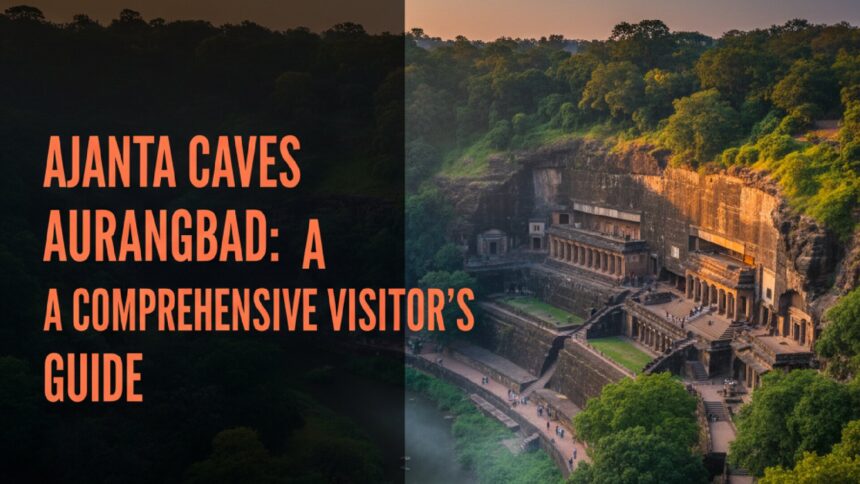
The Ajanta Caves are a series of approximately 30 rock-cut Buddhist monuments located about 100 kilometers from the city of Aurangabad. Dated from the 2nd century BCE to around 480 CE, the site was developed in two distinct phases, separated by several centuries. The caves include monasteries (viharas) and prayer halls (chaitya-grihas), all hewn by hand from a 75-meter rock wall along the Waghora River.
After their construction, the caves were gradually abandoned and reclaimed by the jungle, their existence forgotten for over a millennium. They were rediscovered by chance in 1819 by John Smith, a British cavalry officer on a tiger hunt. His find unveiled some of the most sophisticated examples of ancient Indian art and architecture to the modern world.
The entire complex functions as an open-air museum, showcasing the evolution of Buddhist thought, from the earlier Hinayana (Theravada) tradition, which forbade anthropomorphic representation of the Buddha, to the later Mahayana tradition, which embraced it.
Why the Ajanta Caves Matter
The global significance of the Ajanta Caves was formally recognized in 1983 when they were designated a UNESCO World Heritage site. Their inclusion was based on their outstanding representation of Buddhist religious art and their influence on subsequent artistic developments in Asia.
The caves matter primarily for their paintings. The murals at Ajanta are the finest surviving examples of ancient Indian painting, offering a panoramic view of the life and culture of the time. These artworks depict the Jataka tales—stories of the Buddha’s previous lives—as well as scenes from the royal courts and daily life of ancient India. Their masterful composition and emotional depth provide invaluable insight into the period’s social fabric.
Furthermore, the site is a testament to extraordinary engineering and architectural skill. The ability to excavate such elaborate, multi-storied structures from solid rock with precision and artistry is a feat of ancient technology. The caves demonstrate a clear architectural progression, allowing historians to trace the development of rock-cut design over centuries.
Related: UNESCO selection criteria for World Heritage sites
For anyone interested in art history, religious studies, or archaeology, visiting the Ajanta Caves Aurangabad offers a direct connection to a pivotal era in world history.
Key Benefits/Features
The enduring appeal of the Ajanta Caves lies in their specific artistic and architectural components. A visitor’s appreciation is deepened by understanding these distinct features before arrival.
The Chaitya-Grihas (Prayer Halls)
These are the congregational worship halls, characterized by their long, apsidal-ended design and high, vaulted ceilings, often with rock-cut ribs mimicking wooden structures. The focal point of each chaitya-griha is the stupa, a solid, dome-shaped monument, at the far end. In the earlier caves, the stupa is the object of veneration, whereas in the later Mahayana caves, a large sculpted figure of the Buddha is often integrated with it. Caves 19 and 26 are exceptional examples, featuring elaborate facades and intricate interior carvings.
The Viharas (Monasteries)
Adjacent to the prayer halls are the viharas, or monasteries, which served as residences and contemplative spaces for the monks. A typical vihara consists of a central hall, often lined with pillars, with small, austere cells for individual monks cut into the side walls. Several viharas contain shrines with large Buddha images. Caves 1, 2, 16, and 17 are particularly famous for housing the most well-preserved and artistically significant murals.
The Murals and Paintings
This is arguably the most important feature of Ajanta. Created using a tempera technique on a prepared plaster surface of clay, straw, and lime, the paintings are vibrant and expressive. They are not frescoes, as the paint was applied to a dry surface. These murals are primary sources for understanding ancient Indian society, depicting everything from royal processions and religious scenes to flora and fauna. Also Read: understanding Buddhist iconography and architecture
Sculpture and Architecture
Beyond the paintings, the caves are rich with sculptural detail. Doorways are ornately carved, pillars display intricate motifs, and massive figures of the Buddha and Bodhisattvas dominate the shrine rooms. In Cave 26, a colossal sculpture of a reclining Buddha, representing his Mahaparinirvana (final passing), is a standout masterpiece. The architectural consistency and the sheer scale of the excavation remain a source of wonder.
How to Get Started
Organizing your trip to the Ajanta Caves Aurangabad requires careful planning, as the site is relatively remote. The city of Aurangabad serves as the primary gateway.
Reaching Aurangabad
- By Air: Aurangabad Airport (IXU) is a domestic airport with direct flights from major hubs like Mumbai and Delhi. It is the most convenient option for travelers with limited time.
- By Train: Aurangabad Railway Station (AWB) is well-connected to the Indian Railways network. Overnight trains from Mumbai are a popular and cost-effective choice.
- By Road: Aurangabad is linked by a network of national and state highways. Government and private buses, as well as private car hires, are available from cities like Mumbai (approx. 7-8 hours) and Pune (approx. 4-5 hours).
Traveling from Aurangabad to the Ajanta Caves
The caves are located approximately 100 kilometers northeast of Aurangabad. The journey typically takes 2.5 to 3 hours one way.
- State Buses (MSRTC): The most economical option. Regular buses depart from the Aurangabad Central Bus Stand for Ajanta. Be aware that these can be crowded and may not be air-conditioned.
- Private Taxi/Car Hire: The most flexible and comfortable option. You can hire a car and driver for the full day, allowing you to travel at your own pace. This is highly recommended for small groups or families.
- Organized Tours: Many hotels and travel agents in Aurangabad offer packaged day tours to Ajanta, often including a guide. This can be a convenient, hassle-free alternative.
Read More: guide to navigating India’s transport network
Visas and Documentation
International tourists require a valid passport and an Indian visa to enter the country. Most nationalities are eligible for an e-Visa, which can be applied for online in advance of travel. It is prudent to check the latest regulations before your departure.
This Might Interest You: Indian e-Visa requirements and travel essentials
Best Practices
To maximize your experience and contribute to the preservation of this fragile site, consider the following best practices:
- Arrive Early: The site opens at 9 AM. Arriving early helps you avoid the largest tour groups and the intense midday sun, particularly from March to October.
- Hire an Official Guide: Licensed guides are available at the entrance. Their expertise is invaluable for understanding the complex iconography of the paintings and the history of each cave. Ensure they have an official ID from the Archaeological Survey of India (ASI) or Maharashtra Tourism Development Corporation (MTDC).
- Wear Appropriate Footwear: The site is extensive and involves considerable walking, including uneven steps. Sturdy, comfortable shoes are essential. You will be required to remove your shoes before entering many of the caves.
- Allocate Sufficient Time: A rushed visit is a wasted one. Plan for a minimum of 4-6 hours at the site to explore the key caves without feeling hurried.
- Prohibit Flash Photography: Flash is strictly forbidden inside the caves as the intense light causes irreversible damage to the ancient pigments. Low-light photography without a flash is generally permitted in most, but not all, caves.
- Stay Hydrated: Carry ample water. While some refreshments are available at the base area near the entrance, options are limited once you are exploring the caves themselves.
Common Mistakes to Avoid
Many first-time visitors make preventable errors. Avoiding them can significantly improve the quality of your trip.
Conclusion & CTA
A journey to the Ajanta Caves Aurangabad is more than a tour; it is an immersion into a world of artistic brilliance and spiritual devotion frozen in time. The caves stand as a powerful testament to the skill, faith, and cultural richness of ancient India. From the narrative depth of the Jataka murals to the monumental scale of the rock-cut architecture, the site offers a unique window into a history that continues to inspire awe.
Proper planning is the key to unlocking a deep appreciation for this landmark. By understanding its historical context and navigating the logistics with care, your visit will transform from a simple sightseeing trip into a meaningful historical exploration.
Have you visited the Ajanta Caves? Share your experience or any additional tips in the comments below.