


Exploring the Best of Aurangabad Sambhaji Nagar
You might know it as the City of Gates. Or maybe you know it as the tourism capital of Maharashtra. Whatever you call it, Aurangabad Sambhaji Nagar is one of those rare places where history doesn’t just sit in a museum. It’s built into the cliffs, carved into the hills, and served on your dinner plate.
Most people come here for the big names—the caves. And honestly, they should. But if you only see the caves, you’re missing the soul of the city. There’s a strange, beautiful mix of Mughal architecture, Buddhist serenity, and a very modern hustle that makes this place unique.
If you’re planning a trip, you’re probably looking for a list of things to do that goes beyond the basic brochure. This guide covers the heavy hitters and the local secrets that make Aurangabad Sambhaji Nagar worth a long weekend.
- The Grandeur of the Ellora Caves
- A Deep Dive Into the Ajanta Caves
- The Iconic Bibi Ka Maqbara
- Climbing the Heights of Daulatabad Fort
- Best Local Food in Aurangabad Sambhaji Nagar
- Hidden Gems: Panchakki and Himayat Bagh
- Where to Shop for Paithani and Fabrics
- Planning Your Aurangabad Sambhaji Nagar Adventure
The Grandeur of the Ellora Caves
You can’t talk about this city without starting at Ellora. It’s about 30 kilometers from the city center, but it feels like another world. These aren’t just “caves” in the way you’d imagine a dark hole in the ground. They are massive, multi-story temples carved directly out of a single volcanic basalt cliff.
The star of the show is Cave 16, also known as the Kailasa Temple. It is the largest monolithic structure in the world. Think about that for a second. Builders started at the top of a mountain and carved downward. They didn’t add stone; they just took away what wasn’t the temple.
The detail is staggering. You’ll see elephants, intricate friezes of the Ramayana, and massive pillars that look like they were turned on a lathe. It took over 100 years to finish. Walking through it, you feel tiny.
But don’t just stop at Kailasa. The Buddhist and Jain caves further down the path offer a much quieter, more meditative vibe. The “Carpenter’s Cave” (Cave 10) has a ceiling that looks like wooden beams, but it’s all stone. It’s a masterclass in ancient engineering.
Read More: Discover the monolithic rock-cut architecture of Ellora
A Journey to the Ajanta Caves
While Ellora is about architecture and scale, Ajanta is all about the art. These caves are older and further away—about a two or three-hour drive from the heart of Aurangabad Sambhaji Nagar. But the drive is worth every minute.
These 29 Buddhist caves are famous for their murals. They were “lost” to the jungle for centuries until a British officer stumbled upon them while hunting tigers in 1819. Because they were hidden for so long, the colors in the paintings are still remarkably vibrant.
The paintings tell stories of the Buddha’s past lives, known as Jataka tales. Even if you aren’t a history buff, the sheer talent on display is moving. The way the artists used light and shadow back then is something you’d expect from the Renaissance, not 2,000 years ago.
Also Read: Official records of the Ajanta Buddhist cave monuments
The caves are arranged in a horseshoe shape around a river valley. If you visit during the monsoon, the waterfalls tumbling over the cliffs make the whole place look like a scene from an adventure movie. It’s easily one of the most peaceful things to do in the region.
Visiting Bibi Ka Maqbara: The Deccan’s Taj
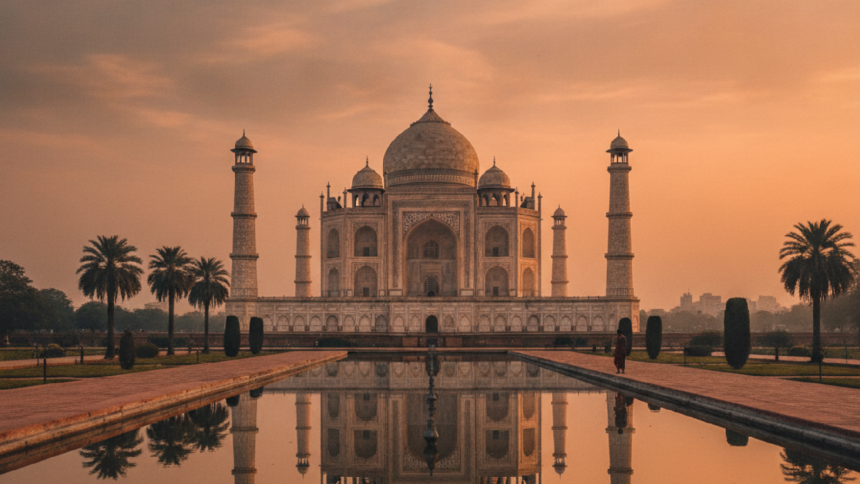
When you first see Bibi Ka Maqbara, you might do a double-take. It looks strikingly like the Taj Mahal. People often call it the “Mini Taj” or the “Taj of the Deccan.”
It was built by Prince Azam Shah, the son of Aurangzeb, in memory of his mother. While it might not have the pure white marble scale of the Agra original, it has a charm of its own. The intricate stucco work and the way the sun hits the main dome at sunset are beautiful.
The gardens surrounding the tomb are a great place for a slow walk. It’s right in the city, so it’s easy to visit in the late afternoon when the light is perfect for photos. Many locals hang out here, so it feels less like a tourist trap and more like a living part of the city.
This Might Interest You: The architectural splendor of the historic Bibi Ka Maqbara
Actually, seeing this monument gives you a better sense of the Mughal influence that shaped Aurangabad Sambhaji Nagar. It’s a bit more grounded than the Taj, but the symmetry is just as satisfying.
Climbing the Heights of Daulatabad Fort
If you like a bit of a workout with your history, Daulatabad Fort is your place. It’s located on the way to Ellora. This fort was once the capital of India for a short, chaotic period when Sultan Muhammad bin Tughlaq moved his entire population here from Delhi.
The fort is built on a conical hill and was considered invincible. To get to the top, you have to walk through a dark, winding tunnel called the “Andhari.” Back in the day, soldiers would trap enemies in here with smoke and hot oil. It’s a bit spooky but very cool.
The view from the top is the best in the city. You can see the whole valley and the massive stone walls that stretch for miles. Look out for the Chand Minar, a bright pink tower that stands out against the green landscape.
It’s a steep climb, so wear good shoes. And maybe don’t go at noon when the sun is beating down on the rocks. The breeze at the summit makes the sweat worth it, though.
Best Local Food in Aurangabad Sambhaji Nagar
After all that walking, you’re going to be hungry. The food in Aurangabad Sambhaji Nagar is a blend of Hyderabadi and Marathwada flavors.
The one thing you absolutely have to try is Naan Qalia. It’s a signature dish of the city. The “Qalia” is a slow-cooked meat curry made with a mix of about 35 spices, and the “Naan” is a heavy, clay-oven bread that is quite different from what you get in North India.
Where to Find the Best Bites
- Naan Qalia: Head to the old city area, specifically near the Gulmandi or Shahgunj areas.
- Tahri: This is a fragrant, spicy rice dish similar to Biryani but with a local twist.
- Street Food: Look for shops selling “Vada Pav” or “Bhel” near the Cannaught Place area. It’s the social hub of the city.
Also, don’t forget the sweets. Look for “Mawa Jalebis.” They are dark, thick, and incredibly rich. One is usually enough to give you a sugar rush for the rest of the day.
The city’s food culture is very laid back. You’ll find high-end restaurants, but the best flavors are usually in the small, crowded shops where the recipes have been passed down for generations.
Hidden Gems: Panchakki and Himayat Bagh
Sometimes you need a break from the massive monuments. Panchakki is a 17th-century water mill that is surprisingly clever. It uses an underground water channel to turn a grindstone that used to make flour for pilgrims.
The garden there is cool and shaded, and there’s a large pond full of fish. It’s a quiet spot to just sit and think. It shows how advanced the engineering was in Aurangabad Sambhaji Nagar even hundreds of years ago.
Right nearby is Himayat Bagh, a massive 17th-century garden that now houses a fruit research center. It’s basically a giant forest in the middle of the city. If you want to see where the famous mangoes of the region grow, this is the place. It’s great for a morning walk if you want to escape the traffic and noise.
Shopping at Gul Mandi
If you want to take a piece of the city home, you go to Gul Mandi. This is the busiest market in Aurangabad Sambhaji Nagar. It’s a maze of narrow lanes where you can find everything from spices to clothes.
The big thing to buy here is Paithani silk. These sarees are famous across India for their peacock motifs and gold thread work. They are handmade and can take months to finish. Even if you aren’t buying a whole saree, you can find Paithani borders or stoles.
You should also look for Himroo fabrics. Himroo is a local weaving style that uses silk and cotton to create a fabric that feels like velvet. It was originally developed as a cheaper alternative to the royal brocades. It’s very soft and makes for great scarves or shawls.
Planning Your Aurangabad Sambhaji Nagar Adventure
So, how do you actually put all this together? Most people find that three days is the sweet spot for visiting Aurangabad Sambhaji Nagar.
On your first day, hit the Ellora Caves and Daulatabad Fort since they are in the same direction. On day two, dedicate the whole day to Ajanta. It’s a long haul, but you shouldn’t rush it. On the third day, stay in the city to see Bibi Ka Maqbara, Panchakki, and do some shopping.
The best time to visit is between October and March. The weather is pleasant enough that you won’t melt while climbing the fort. If you can handle a bit of rain, the monsoon season (July to September) is actually beautiful because the hills turn bright green and the waterfalls are in full swing.
Getting Around
Auto-rickshaws are everywhere. They are the easiest way to get around the city. Just make sure to agree on a price before you get in, or ask them to use the meter (though that’s rare).
For the trips to Ajanta and Ellora, it’s usually better to hire a private cab for the day. It gives you the flexibility to stop whenever you want, and you won’t have to worry about finding a ride back to the city in the evening.
Also, try to stay near the Cannaught Place area if you want to be close to cafes and restaurants, or near the Railway Station if you want better transport links.
Aurangabad Sambhaji Nagar isn’t just a stopover. It’s a place that asks you to slow down and look at the details—the carving on a pillar, the spice in a curry, or the weave of a silk thread. It’s a city that has seen empires rise and fall, yet it still feels energetic and fresh.
Are you ready to see the caves for yourself, or are you more excited about the food? Either way, you won’t leave this city disappointed.